
Staying Steady: How to Build Confidence and Prevent Falls
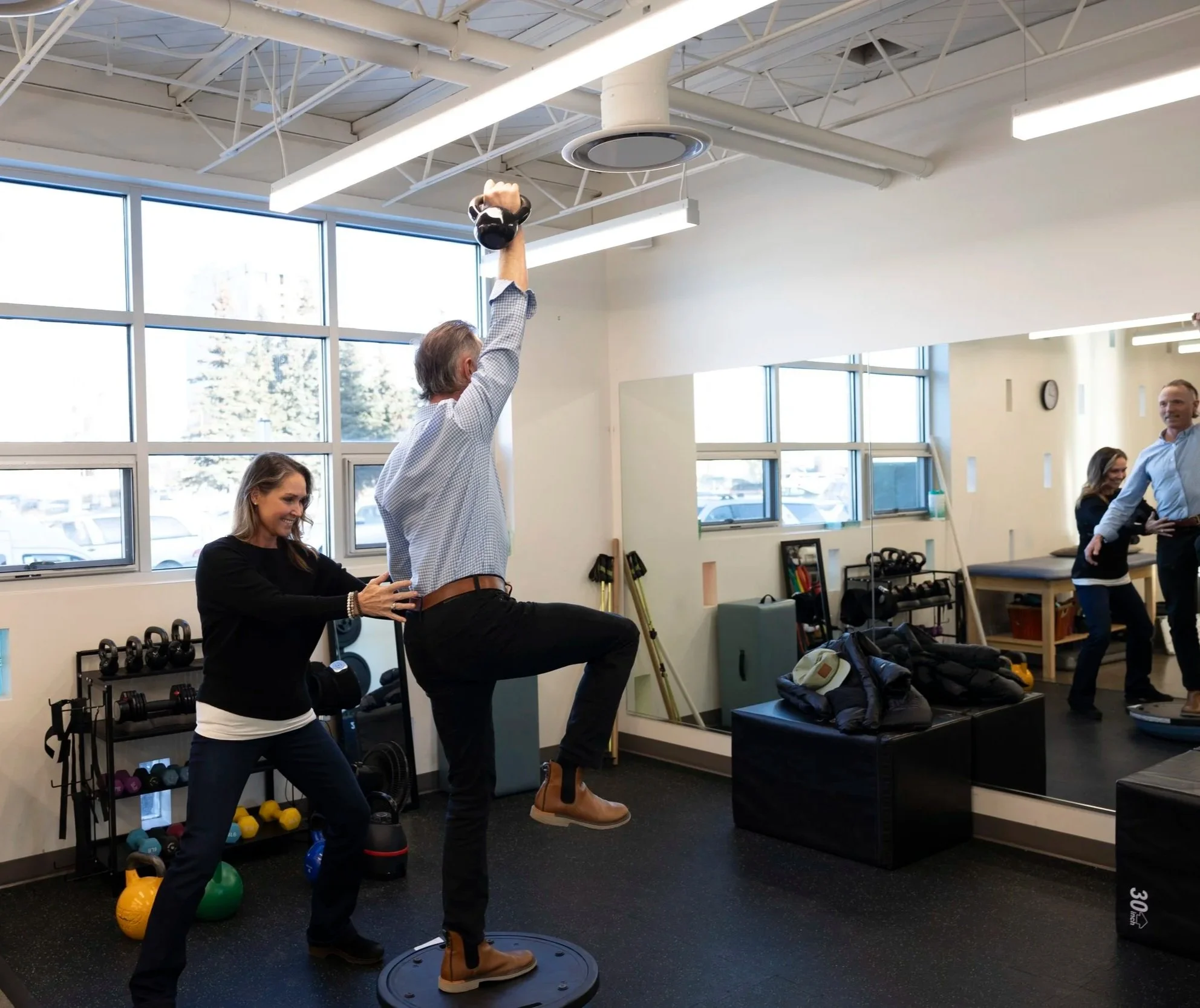
Falling can feel scary – but there is a lot you can do to stay strong, steady, and independent.
Many people think fall prevention is just about being careful. But the real key is keeping your body ready to react quickly when something unexpected happens.
Why Falls Happen
Falls can happen for several reasons:
Difficulty multi-tasking
Reduced strength and motor control
Slower reaction time
Vision or hearing changes
Dizziness and fatigue
Fear of falling
The biggest risk factor is not age-it is how well the body reacts under pressure especially during cognitive and motor multi-tasking.
The MOST important Questions You Can Ask to Support Fall Prevention
When do you feel most unsteady?
Where do you worry about falling?
Do you feel confident getting up if a fall happened?
Does anything make walking harder (darkness, carrying items, busy environments, fatigue, vision, pain, distraction)?
Dual-Task Training: Strengthening the Brain & Body Together
Many falls happen when people do two or more things at once. TRAIN dual task activities to improve your reaction time, balance, and mental agility:
“Clock Yourself” App
Zumba Gold (on YouTube)
Tai Chi
Wii Fit or VR Balance Games
Playing Catch/Ball
Keep it Fun: Joyful Movement Works Best
Exercise doesn’t have to be serious to be effective! Studies show group fitness 3x/week improves balance and social connection. Playful activities improve motivation and physical activity. Gamified exercises increase consistency and enjoyment.
More JOY = more movement = better outcomes
Be Confident, Be Safe
With personalized training, safe-fall practice, dual tasking, and joyful movement, we can help every adult maintain:
Safety
Strength
Balance
Reaction time
Independence
Confidence
Safe-Falling Training: Reducing injury, Not increasing fear
If falls do occur, there are ways to reduce injury. Recent studies show that a safe-fall training can dramatically reduce injury:
33% reduction in hip impact forces
54% reduction in head impact forces
Safe fall strategies include:
Keeping head lifted
Bending elbows and knees
Rolling through the spine
Spreading impact wide across large muscle groups
“Practice learning how to fall safely teaches CONFIDENCE – not fear.”
Balance Declines Quickly - Consistency Matters
Research shows that balance begins to decline after just 4 months without training. Fall resilience is a lifelong skill – not a one-time fix.
Regular follow-up is important
Ongoing exercise is essential
Group classes and community movement matter
If You are Falling or Have Fear of Falling
Come in and see one of our specialists for a proper evaluation and assessment of your status.
We can design a specialized fall resiliency program made just for you. Remember, there is no one-size-fits-all plan!
this blog post was written by Michelle Drake, DPT, OCS